Life is a Story
Life is a Story
Originally published on 2024-07-19
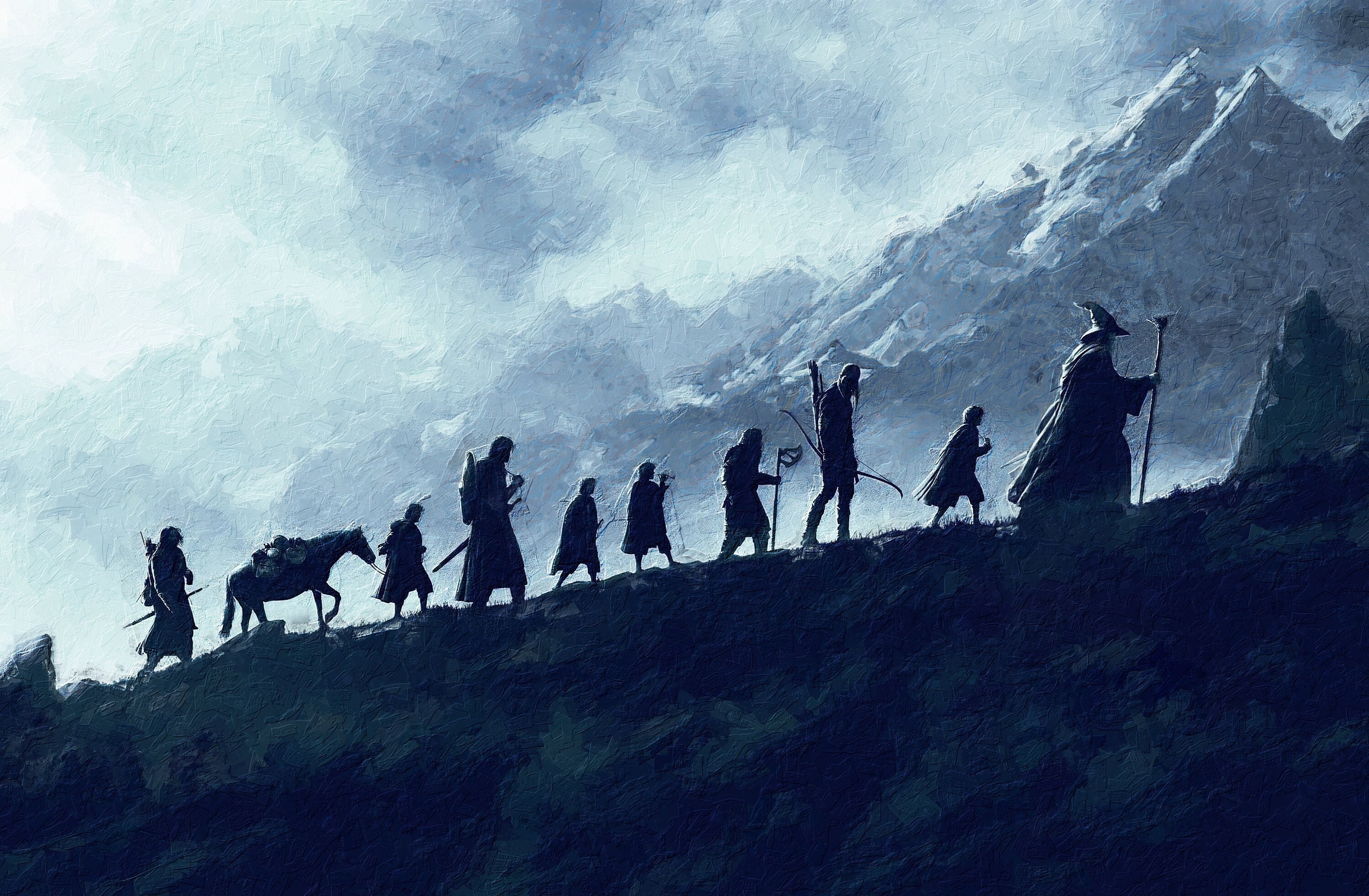
Like most people, I cannot help but to view life through the lense of story. I do this unconsciously, simplifying individuals into actors, massing people into simple groups, and placing actions within greater plots. This narrativization of life is natural and so too is it that we label these narratives of our lives as common stories as old as time. We identify both Davids and Goliaths, Gondors and Mordors, Robin Hoods and Scrooges. While we may not always be as precise in these reductions as we ought to be, they allow us to make sense of a world that is incomprehensibly large and complex. The narrativization of life is not wrong but in fact is most often morally, poetically, and literally right. Furthermore, I personally believe our lives are animated by good and evil, we ourselves are heroes and villains and I do believe that our lives in part and history itself exist within a larger story.
Stories are integral to our lives in more ways than one. We humans understand the world around us through stories; from the bedtime tales and lessons our parents tell us as children to the greatest metaphysics, stories are always at the center. Stories however, serve more purpose than simply reducing reality for our tiny little brains to grasp. Stories build the world up around us helping us to see beyond mere facts and random acts. Stories show us how to live and who to become through both example and by warning. Most crucially, stories illuminate what is true and what is right.
The beauty and benefit of stories is most plainly and easily seen in literature. Simple "children's" bedtime stories are in many cases the moral groundwork of a society. Stories like The Giving Tree by Shell Silverstein, The Hobbit by JRR Tolkien, or The Chronicles of Narnia by C.S Lewis effortlessly show kids virtue and instill it within them. Only the most foolish and proud of people can think themselves above these. Good stories, are true in a human sense. In such stories characters feel real; they act, err, suffer, and prevail just as we might. If a story is truly good it is true for children and adults alike, with an infinite wealth of goodness to be gleaned from them. My parents read all three of those books to me before I could even read them myself, I love them now and benefit just as much as I did when I was a kid. Just as there is always more for us to learn and love in life, the same is true of good stories. These good stories give all a template for who they can be and who they should become.
This greatness of stories is not limited of course in literature only to children's books. Whether we read Unbroken or Harry Potter it makes us want to be true and brave, inspiring us effortlessly to be a hero ourselves. The call to heroism is only more honest, costly, and necessary in great adult books. In reading the Odyssey we are be inspired to prevail against all suffering unwaveringly for the sake of our family. In Dante, if we are honest, we are called to look with cleansing fire upon our own sins and in our souls. Books like these not only inspire us to virtue but demonstrate to us truly what it is.
From "simple" children's adventure tales to high theological journeys the good stories of literature inspire us, teach us, and call us to be more . This is obviously also true in the similar realms of cinema, theatre and in the millennia of oral tradition. Interestingly, stories are also essential in a more abstract sense in the indispensable pursuits of politics, philosophy, religion, and friendship itself.
While people do not often think of it, politics are all about stories. Elections are never won by statistics and rarely by logic, they are won by whoever tells the better story. Politicians each tell a different story of America. They tell a story of sin and suffering or of liberty and victory, of a country rising or a nation decaying. This is plain enough to see in today's politics; Trump's entire message is that America was great but has fallen and needs saving. Politicians themselves are also judged by the story they tell of themselves; their background, their inspiration, their victories, and their moments of growth. The same can be true of any proposed plan or policy, they will all have a story and tell one. To understand politics, and to understand people is to see that stories move people because stories are what people understand, not statistics, not reason, not facts, stories.
"Philosophy" as a pursuit seems on the surface to be abstract and boring, and often it is. Philosophers may tell us that we are "rational" creatures, only the good ones show us. The use of stories or images is at the center of the philosophy which is actually understood. The Greeks wrote in dialogues so that their philosophy would be in the form of a conversation (a story) and would be understood. Perhaps the most famous "piece of philosophy" ever is a story, Plato's cave. From a story people can see a concept realized, they see how it works, what it looks like and what it truly means. Plato could say "we are enslaved by our ignorance" and it would likely have no effect. When Plato tells us that "we are chained in a cave watching shadows on a wall thinking them reality" we are far more likely to truly understand and take his message to heart.
Abstractly, religion itself is fundamentally a story; the story of us and of the universe. More concretely, religion stands on stories, on parables and on allegories. Jesus can say that we should truly love and care for even strangers and we may hear it and think it is nice. When Jesus tells the parable of the good Samaritan it sticks. This is for several reasons. The first is that we simply remember stories better. The second is that we understand the principle more deeply when it is demonstrated in a story. The third is that we see an idea make more sense logically in a practical contextualized sense than it does in a hypothetical sense. Finally and most importantly, if the stories are good we can return to them an infinite number of times. Stories that are true in a human sense are available to child and philosopher alike, thus is the beauty of the parables and so too of stories.
Finally (forgive cheesiness), stories are the foundation of human relationships. People come together over shared experiences told as stories, people come to know each other as they learn the stories of each other, and people's friendships are in a sense the story shared between two people. When we are stuck in the first person it's hard to ever see or love anyone else. We ought to take the time to hear the stories of others, and as I have detailed I don't think there is anything better than to take in a few more stories.
Above are my preliminary thoughts on the nature of stories. It is clear to me that stories are the foundation of all human understanding. As I spend the next years trying to figure out why this is for my Major studying stories I shall keep the corner updated.
-thanks
Get email updates for new blog posts by following me on Substack.